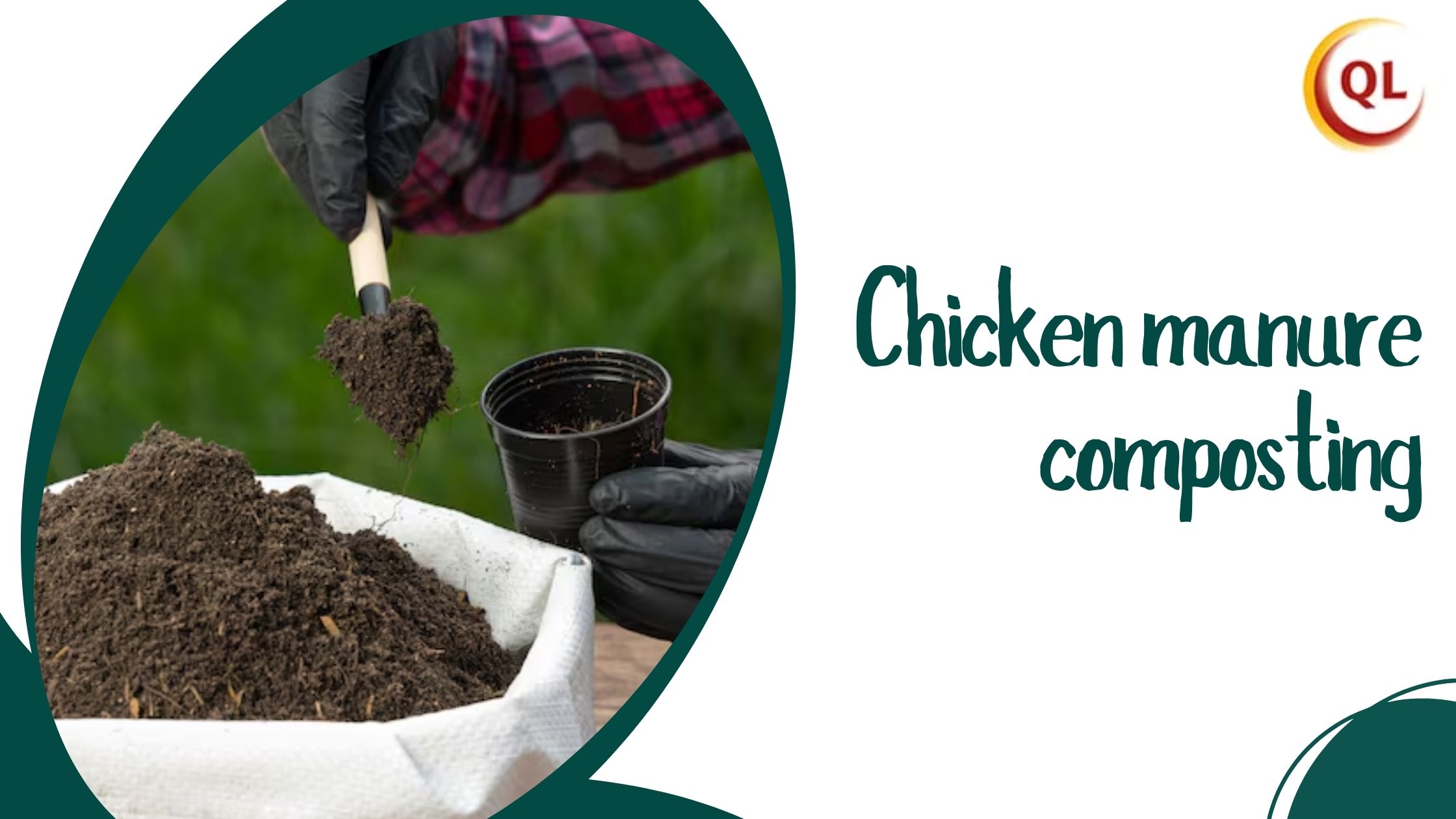
As organic farming continues to grow across the world, farmers are increasingly turning to natural nutrient sources to improve soil fertility and crop productivity. Chicken Manure Composting is one of the most effective and environmentally friendly methods of producing nutrient-rich organic fertilizer. Instead of letting poultry waste cause unpleasant odor, pollution, or wasted resources, composting transforms it into a valuable soil conditioner that supports long-term agricultural success.
At QL Farms, we promote sustainable farming practices and provide high-quality Organic Biofertilizer and composted chicken manure products to help farmers improve soil health and increase yield. This step-by-step guide explains how farmers can compost chicken manure properly and safely for organic farming.
🌱 Why Choose Chicken Manure Composting?
Chicken manure is naturally rich in nitrogen, phosphorus, potassium, calcium, and essential micronutrients—making it a powerful organic fertilizer. However, using raw manure directly on crops can be harmful due to:
High ammonia levels
Pathogens and weed seeds
Excessive salts that burn plant roots
Composting stabilizes nutrients and eliminates harmful organisms, making the manure safe and highly effective for crop growth. The result is a premium organic fertilizer that supports strong root development, enhances soil structure, and increases water retention.
🐓 Benefits of Chicken Manure Composting
✔ Improves soil fertility and enhances microbial activity
✔ Boosts crop yield and growth efficiency
✔ Reduces dependency on chemical fertilizers
✔ Prevents odor and contamination issues
✔ Provides long-term cost savings
✔ Converts waste into high-value organic input
Composted manure is also an excellent base material for Organic Biofertilizer, supporting sustainable agriculture and improving soil regeneration.
📍 Step-By-Step Guide to Chicken Manure Composting
Step 1: Collect the Chicken Manure
Gather fresh manure from poultry houses, including litter materials such as sawdust or rice husk. This helps maintain moisture balance and improves overall compost structure.
Step 2: Prepare the Composting Area
Choose a dry, shaded place with good airflow. You can use a compost pit, bin, or open pile system depending on farm size and resources. The area should allow easy turning and moisture control.
Step 3: Mix Carbon and Nitrogen Materials
For effective composting, maintain the right Carbon-to-Nitrogen (C:N) ratio. Chicken manure is high in nitrogen, so mix it with carbon-rich materials like:
Dry leaves
Straw
Sawdust
Rice husk
Crop residues
Ideal ratio: 25–30 parts carbon to 1 part nitrogen.
Step 4: Build the Compost Pile
Layer carbon-rich materials and chicken manure alternately, similar to building a cake structure. The pile should ideally be 1–1.5 meters high to allow sufficient heat generation.
Step 5: Maintain Moisture
Water the mixture until it reaches the correct moisture level—similar to a squeezed sponge. Avoid excess water to prevent anaerobic decomposition and foul smells.
Step 6: Turn the Pile Regularly
Turn the compost every 7–10 days to maintain aeration and support microbial activity. Proper turning allows the pile to heat up evenly, killing pathogens and weed seeds.
Internal compost temperature should reach 55–60°C.
Continue turning until the temperature begins to drop naturally.
Step 7: Allow Maturation
Compost is ready in 6–8 weeks, depending on climate, moisture, and management. Mature compost:
Looks dark brown and crumbly
Has an earthy smell
No longer produces heat
Step 8: Screen and Store
Remove large particles using a sieve and store in bags or a covered dry location to preserve nutrients.
🌾 How to Use Composted Chicken Manure in Organic Farming
Application Method Recommended Use
Soil preparation before planting 1-2 tons per acre depending on crop
Top dressing During early plant growth stages
Mixed with Organic Biofertilizer Enhances microbial population and efficiency
For best results, apply before irrigation and mix well into the soil.
💡 Chicken Manure Composting + Organic Biofertilizer = Maximum Productivity
Using composted chicken manure together with Organic Biofertilizer enhances nutrient availability and microbial activity. This combination:
Improves nutrient absorption
Strengthens plant roots
Increases resistance to pests and drought
Supports long-term soil health
Many farmers successfully using this method report higher yields and reduced fertilizer costs.
🚜 How QL Farms Supports Sustainable Farming
At QL Farms, we provide:
✔ High-quality composted chicken manure fertilizer
✔ Premium Organic Biofertilizer formulations
✔ Bulk supply options for farms and distributors
✔ Technical guidance and farming support
✔ Affordable and eco-friendly solutions
We are committed to promoting organic farming that protects the environment while improving profitability for farmers.
🌍 Build a Sustainable Future with Organic Farming
Chicken Manure Composting is a powerful solution that transforms waste into valuable fertilizer and helps farmers reduce chemical use, improve production, and increase income. As the demand for organic produce continues to rise, farmers who invest in soil health today are securing long-term success.
Healthy soil is the foundation of profitable and sustainable farming. As farmers worldwide search for natural alternatives to synthetic fertilizers, one organic input is gaining significant attention for its exceptional effectiveness—Organic Chicken Manure Fertilizer. Rich in essential nutrients and beneficial microorganisms, chicken manure has become one of the most powerful natural soil boosters used in organic and regenerative farming.
At QL Farms, we specialize in premium organic fertilizer solutions, including composted chicken manure and Organic Biofertilizer, helping farmers improve soil structure, increase crop yield, and reduce dependency on chemical inputs. In this article, we explore what makes Organic Chicken Manure Fertilizer so beneficial and how it supports long-term agricultural productivity.
Source: https://qlfarmstayninhliabilityltd.com/about-us.php